China to Launch Space Station by 2020—Or Not
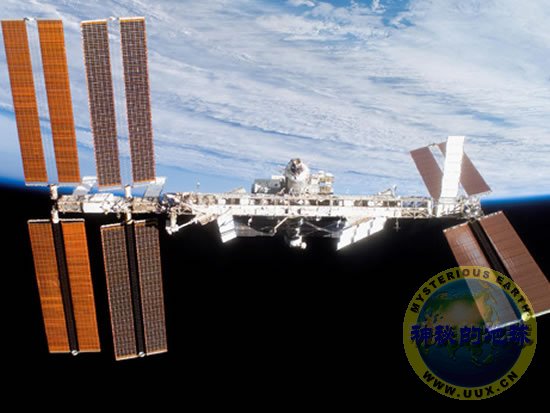
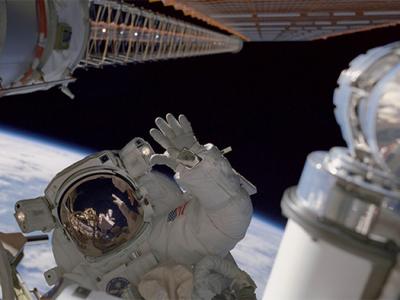
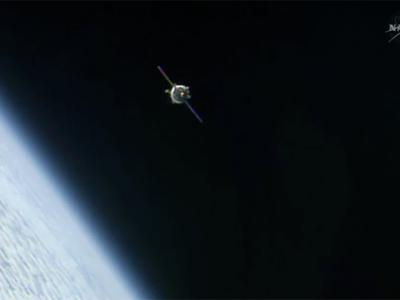
This photograph of the International Space Station was taken Sunday from the shuttle Discovery, as the two spacecraft began to separate before Discovery's return to Earth.
On Wednesday, the Chinese space agency denied reports from state media that it planned to launch its own space station by 2020.
Photograph courtesy NASA
Beijing, China
Associated Press
November 7, 2007
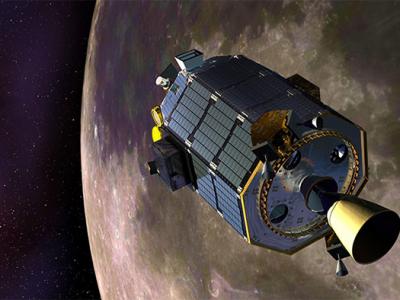
China said its lunar probe had entered its final orbit around the moon Wednesday, but an official backed away from reports of plans to launch a space station by 2020.
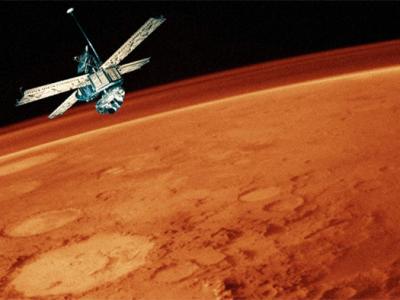
The probe—called Chang'e 1 (see photo), after a mythical Chinese goddess who flew to the moon—made final adjustments at the end of a two-week journey and entered its final working orbit of 125 miles (200 kilometers) from the moon Wednesday.
The first photo of the moon should be sent back later this month, Chinese officials said. By early next year the probe will have measured the whole surface of the moon at least once, officials said.
Space Station by 2020?
But officials denied state media reports Wednesday that the country was planning a space station by 2020.
"So far, according to the plans already published, there are no plans for a space station," Li Guoping, spokesperson of the China National Space Administration, said at a news conference.
The China Daily newspaper said China's planned space station would be "a small-scale, 20-ton space workshop," quoting Long Lehao, a leading designer of the Long March 3A rocket that carried the Chang'e 1 into space.
Chinese space officials have said previously they wanted to build a space station in the next 10 to 15 years, but the target date of 2020 was the first time a schedule has been made public, Long told China Daily..
The report did not say how many people the Chinese station would be able to hold. But its planned weight is believed to be about one-tenth that of the International Space Station, which currently has six people on board.
Space Race
China attaches great prestige to its ambitious space program, seeing it as a way to validate its claims to being one of the world's leading scientific nations.
The country has sent astronauts into space twice in the past four years, and it launched its moon probe about a month after rival Japan.
In 2003, China became only the third country in the world after the United States and Russia to send a human into orbit.
The probe's launch raised the prospect of a space rivalry between China and Japan, with India possibly joining in if it carries through on a plan to send its own lunar probe into space next April.
But Chinese officials have played down talk of a space race, saying Beijing wanted to use its program to work with other countries.
Li, of the Chinese space agency, said China was willing to participate in the International Space Station, joining the 16 countries that are currently involved.
China has not participated in the project in part due to U.S. unease about allowing a communist dictatorship a place aboard.
Copyright 2007 The Associated Press. All rights reserved. This material may not be published, broadcast, rewritten, or redistributed.