Best Pictures of Perseids Meteor Shower
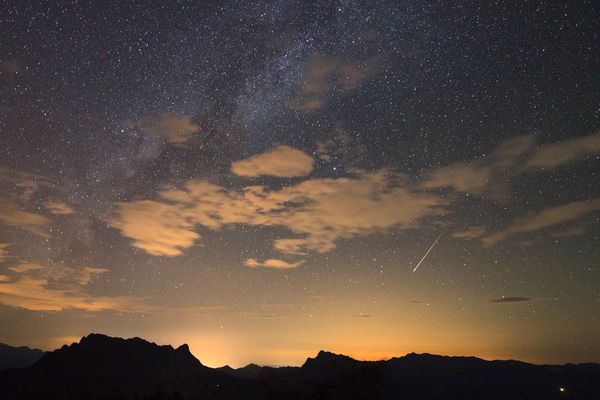
View From China
Photograph by Jeff Dai, National Geographic Your Shot
A lone Perseid fireball shines bright despite the light pollution from the city of Nanchuan in western China.
"Our ten-man group enjoyed more than 300 meteors early this morning. The waves of cheering lasted all night," said photographer Jeff Dai.
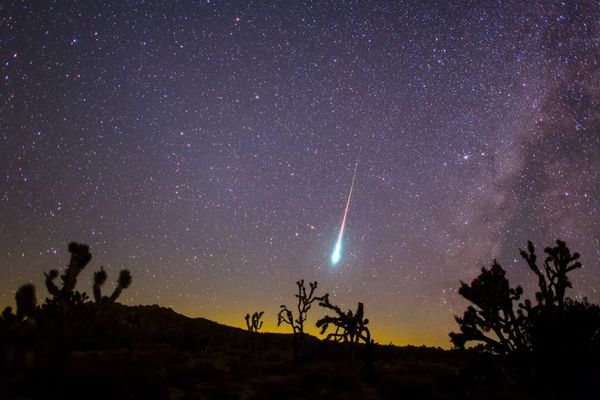
View From the Mojave
Photograph by Wally Pacholka, TWAN
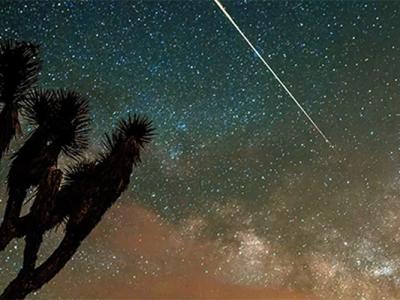
The annual Perseid meteor shower, which peaks this week, is dazzling sky-watchers around the world.
Here, a bright fireball is caught lighting up the starry skies above Teutonia Peak in the Mojave National Preserve in California on August 10, more than a day before the official maximum activity peak for the Perseid meteors. (Read more on enjoying the Perseid meteor shower.)
Considered the most visually stunning meteor shower of 2013, the Perseids peak every August, when the Earth slams into a giant cloud of debris left behind by comet Swift-Tuttle along its orbit.
While most meteors zipping across the skies are no bigger than a grain of sand, fireballs like the one pictured above can be anywhere from the size of a grapefruit to the size of a basketball. The resulting high-speed impact causes unusually bright meteors, which astronomers call bolides, which can cast shadows and even a lingering smoke trail.
—Andrew Fazekas
View From Armenia
Photograph by Oshin D. Zakarian, TWAN
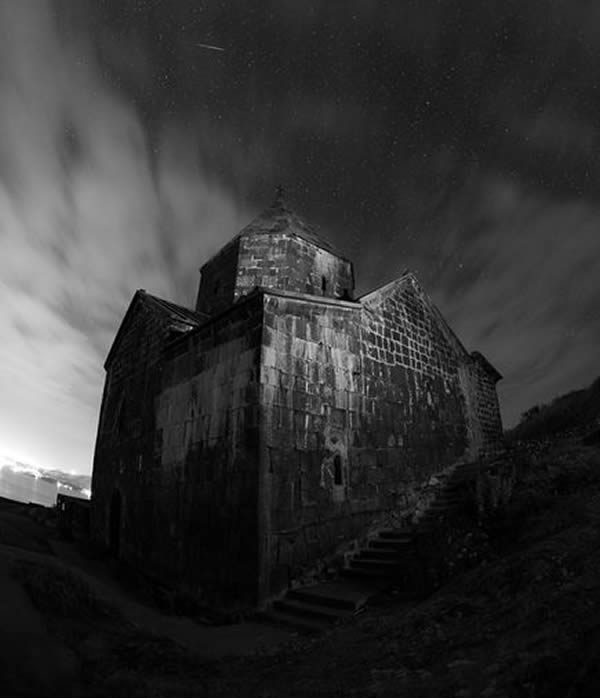
A fast-paced early Perseid meteor punctuates a partly cloudy sky above Lake Sevan in Armenia on August 9.
While peak activity for the Perseid meteors are centered around August 11 to 13, the meteor shower begins to ramp up activity starting on July 17, lasting until August 24.
View From Canada
Photograph by Darryl Van Gaal, National Geographic Your Shot
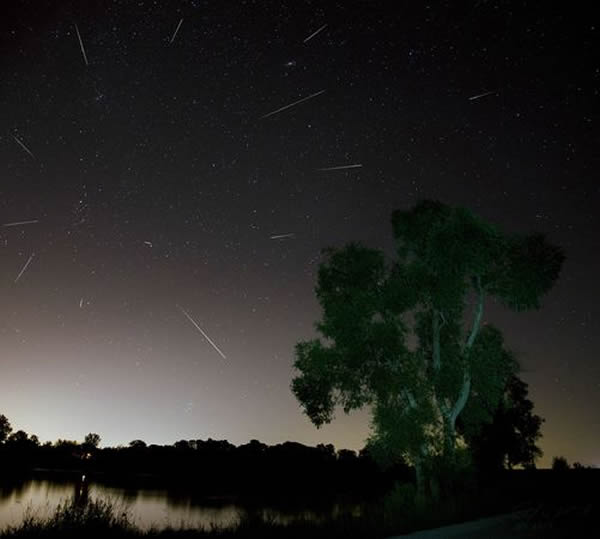
Like a starburst, multiple Perseid meteors appear to radiate outward in this composite image snapped during the height of activity on August 11 above Waterford, Ontario, Canada.
"This image is the result of four and a half hours of continuous shooting," said photographer Darryl Van Gaal. "It was a cold night and I'm glad I took a lawn chair and sleeping bag to keep myself warm."
Perseids, like all other showers, gets its name from the constellation the meteor streaks appear to radiate out from—in this case Perseus.
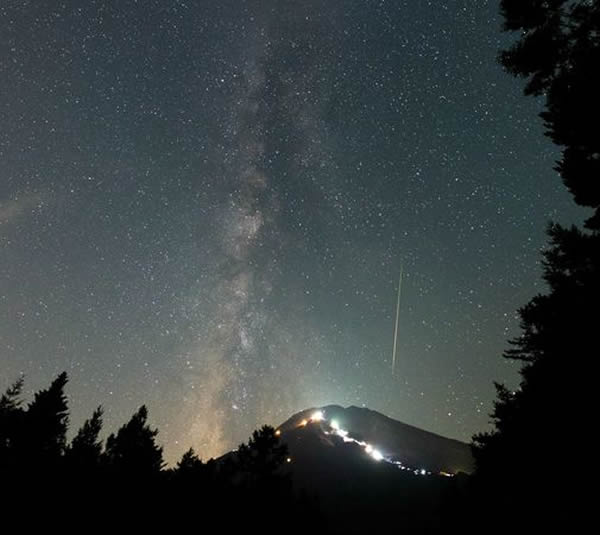
View From Japan
Photograph by Yuga Kurita, National Geographic Your Shot
With the ghostly glow of the Milky Way in the background, a bright Perseid fireball appears to fall toward Japan's Mount Fuji in this stunning shot taken on August 11.
"The meteor gradually changed the color from green, yellow, to pink, and my D600 [camera]¸captured it well," explained photographer Yuga Kurita.
Bright meteors known as fireballs produce vivid colors based on the chemical elements they contain. As the space rock gets vaporized traveling through the Earth's atmosphere at high speeds, sodium can produce flashes of bright yellow, while nickel and magnesium appear as green and blue-white respectively.
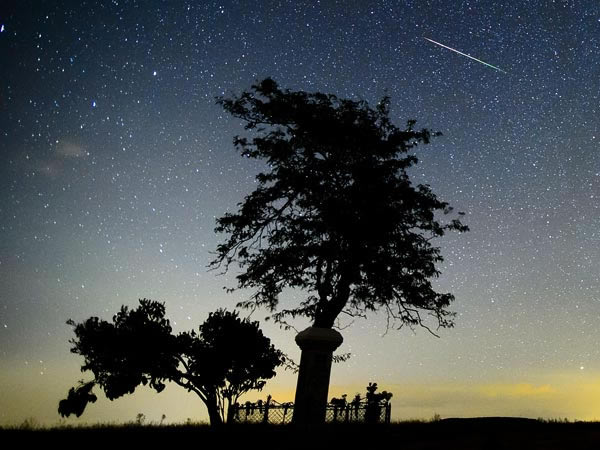
View From Hungary
Photograph by Peter Komka, European Pressphoto Agency
A single Perseid meteor pierces the evening twilight skies above the Salgotarjan landscape in Hungary in this August 11 portrait.
While the best time for watching meteor showers is between local midnight and the predawn hours, when skies are darkest, bright meteors can begin to show up even before nightfall.
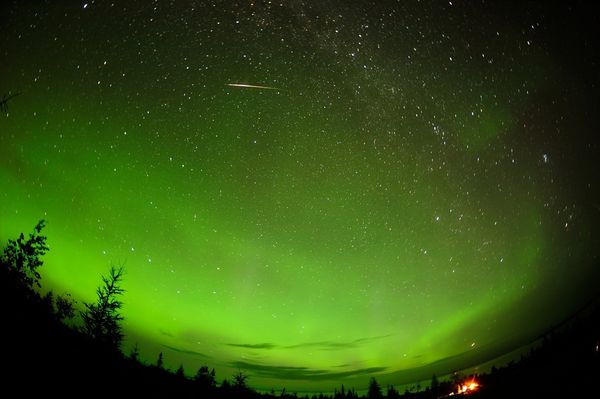
View From Quebec
Photograph by Michel Tournay, National Geographic Your Shot
A lonely Perseid shooting star zips across a sky painted green by northern lights in James Bay, Quebec, Canada.
A giant cloud of energized particles was flung off the sun on August 7, which slammed into Earth's magnetic field on August 10, causing auroras to erupt across many northern latitude countries.
"On August 10, 2013, at 3 a.m. the sky was filled with auroras, and then a nice shooting star appeared above my head as I was getting warm next to the fire below," said photographer Michel Tournay.