Space Observatories Zero-In On Comet ISON: Photos
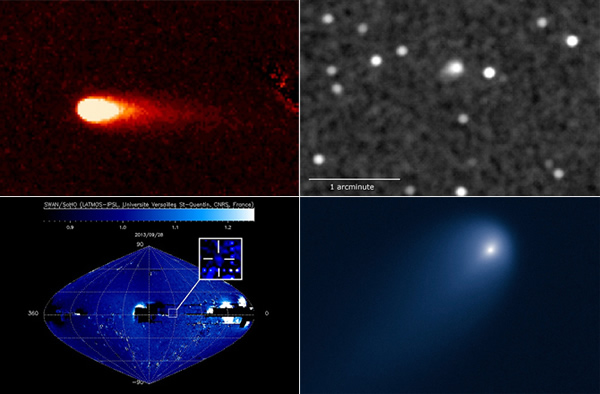
An Armada of Observatories, One Comet
Comet ISON is currently diving through the inner solar system, soon to make a close approach with the sun on Nov. 28. Known as a "sungrazer comet," ISON will dive deep into the sun's corona, enduring the intense multi-million degree plasma and powerful solar energy. Since the "pristine" comet was discovered in September 2012, ground-based observatories, space probes and space telescopes alike have been trying to grab a glimpse of what could be the "Comet of the Century" should it survive its solar close approach. Although many of the space missions were not designed to take snapshots of comets, it hasn't stopped many from trying and contributing valuable science as we continue to track ISON's progress.
With the help of the NASA Comet ISON Observing Campaign, nine space missions are listed as providing observations of Comet ISON. More will inevitably join the fun, but here's the story so far.
PHOTOS: Comet ISON: 5 Things You Should Know
NASA/ESA
Deep Impact/EPOXI
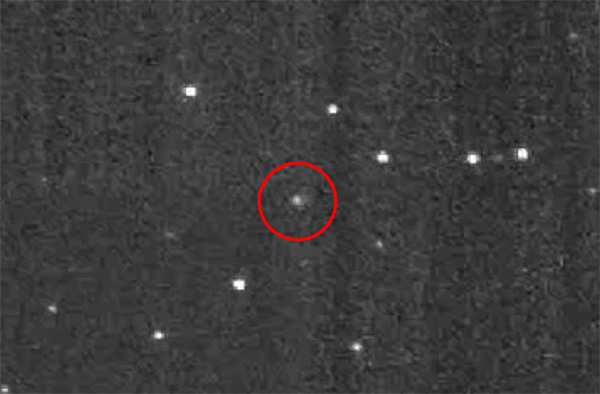
On Jan. 17-18, 2013, NASA's Deep Impact spacecraft imaged Comet ISON during its deep space sojourn from a distance of nearly 500 million miles. From this early observation mission scientists were able to deduce the comet tail was already more than 40,000 miles long, despite the fact it was around the orbit of Jupiter.
ANALYSIS: NASA Probe Spies Incoming Comet ISON
NASA/JPL-Caltech
Swift Gamma-Ray Observatory
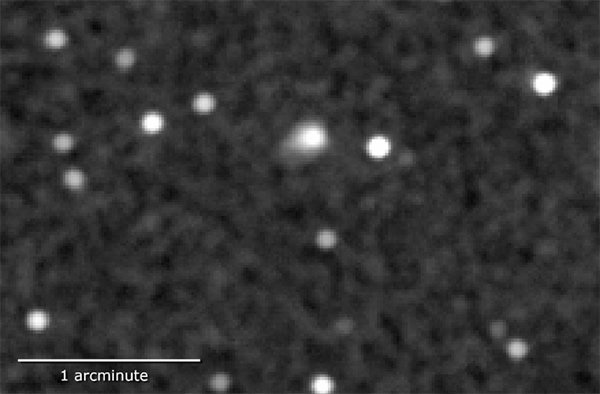
Shortly after NASA's Deep Impact (EPOXI) mission imaged ISON, mission managers of NASA's Swift space observatory commanded the mission to take a look. Although Swift is not designed to observe comets (it is, after all a gamma-ray observatory!), it used its Ultraviolet/Optical Telescope (UVOT) to gain a valuable insight to the comet and its growing coma and tail.
NASA
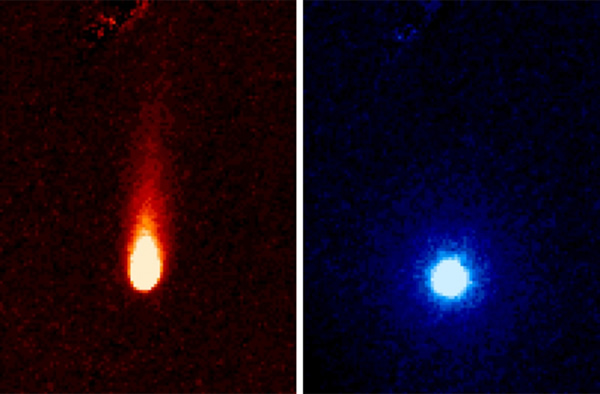
Spitzer Space Telescope
NASA's Spitzer Space Telescope is more at home taking snapshots of the infrared emissions of distant star-forming regions, but that doesn't mean it can't be used to observe comets. Seen here, Comet ISON was observed in two infrared wavelengths on June 13
NASA/JPL-Caltech/JHUAPL/UCF
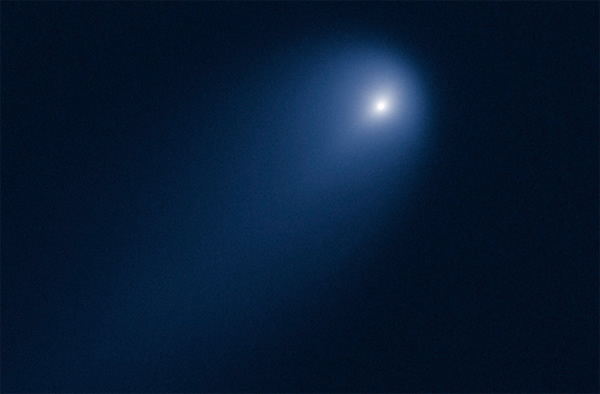
Hubble Space Telescope
Of all the space observatories, the Hubble Space Telescope is able to take some of the most spectacular images of the incoming comet, monitoring ISON as it approaches the sun, watching for any sign of breaking up.
NASA, ESA, and the Hubble Heritage Team (STScI/AURA)
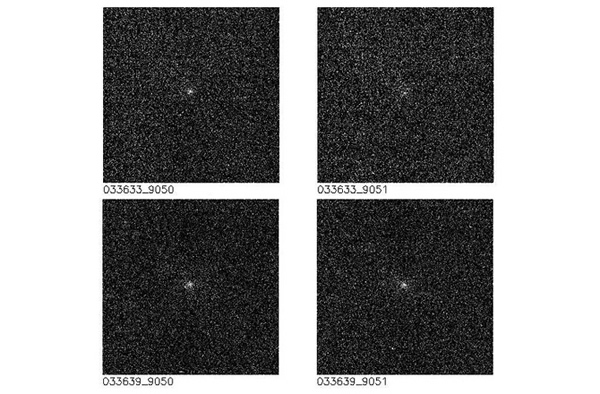
Mars Reconnaissance Orbiter
On Oct. 8, 2013, NASA's Mars Reconnaissance Orbiter was commanded to slew away from it's Mars-facing orientation and direct its HiRISE camera at ISON. Although the comet was exhibiting little activity, HiRISE managed to pick it out of the dark.
NASA/JPL-Caltech
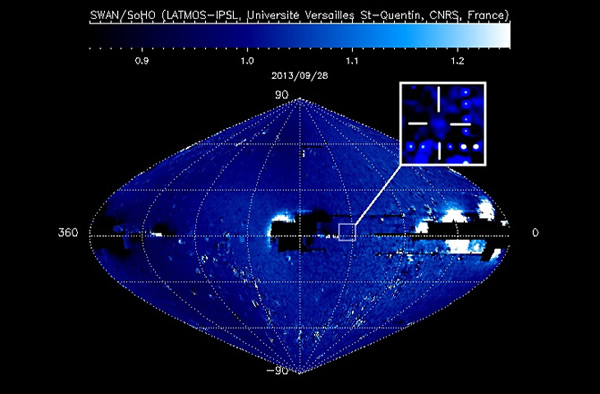
Solar and Heliospheric Observatory
During close approach with Mars, it wasn't only the MRO that snapped Comet ISON. The veteran Solar and Heliospheric Observatory (SoHO) was able to detect the comet with its wide-angle Solar Wind ANisotropies, or SWAN, instrument.
NASA/ESA
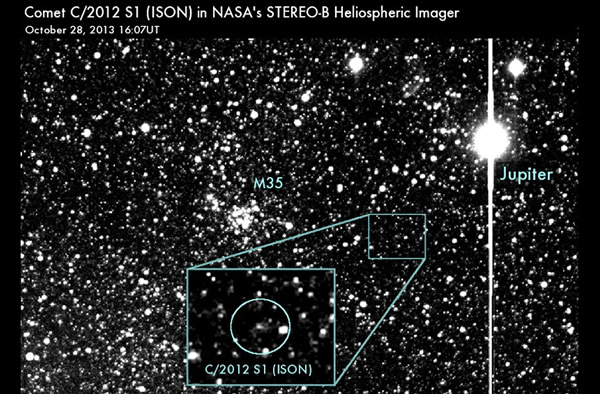
Solar TErrestrial RElations Observatory (STEREO)
On Oct. 28, 2013, Comet ISON drifted into the field of view of one of NASA's twin solar observatories, STEREO B. One of two solar satellites, STEREO B is following Earth in its orbit (while STEREO A is leading) with a unique view from the far side of the sun.
NASA/STEREO

Chandra X-Ray Observatory
On Nov. 4, NASA's Chandra X-Ray Observatory got in on the ISON imaging act, analyzing the structure of the comet. Overall, ISON's X-ray revealed it's a pretty typical comet, shedding 16 Olympic-sized swimming pools worth of water per day.
NASA/Chandra/Casey Lisse
MErcury Surface, Space ENvironment, GEochemistry, and Ranging
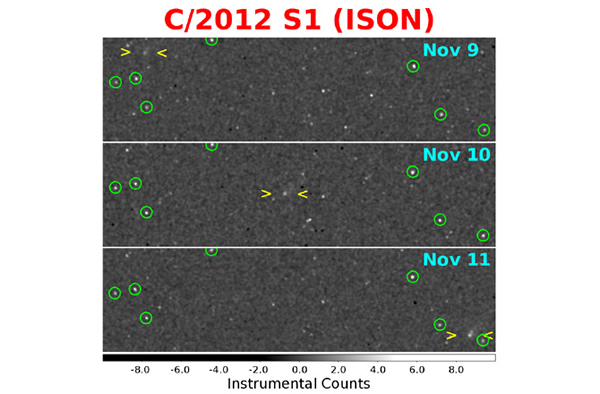
On Nov. 18 and 19 it wasn't only Comet ISON that passed the orbit of Mercury, Comet Encke did the inner solar system dash, too. Earlier in the month, NASA's Mercury orbiter MESSENGER was able to image ISON and Encke as they approached, reminding us there is usually more than one comet flying through the solar system at any given time.
NASA(Nov 19, 2013 04:12 PM ET // by Discovery News)